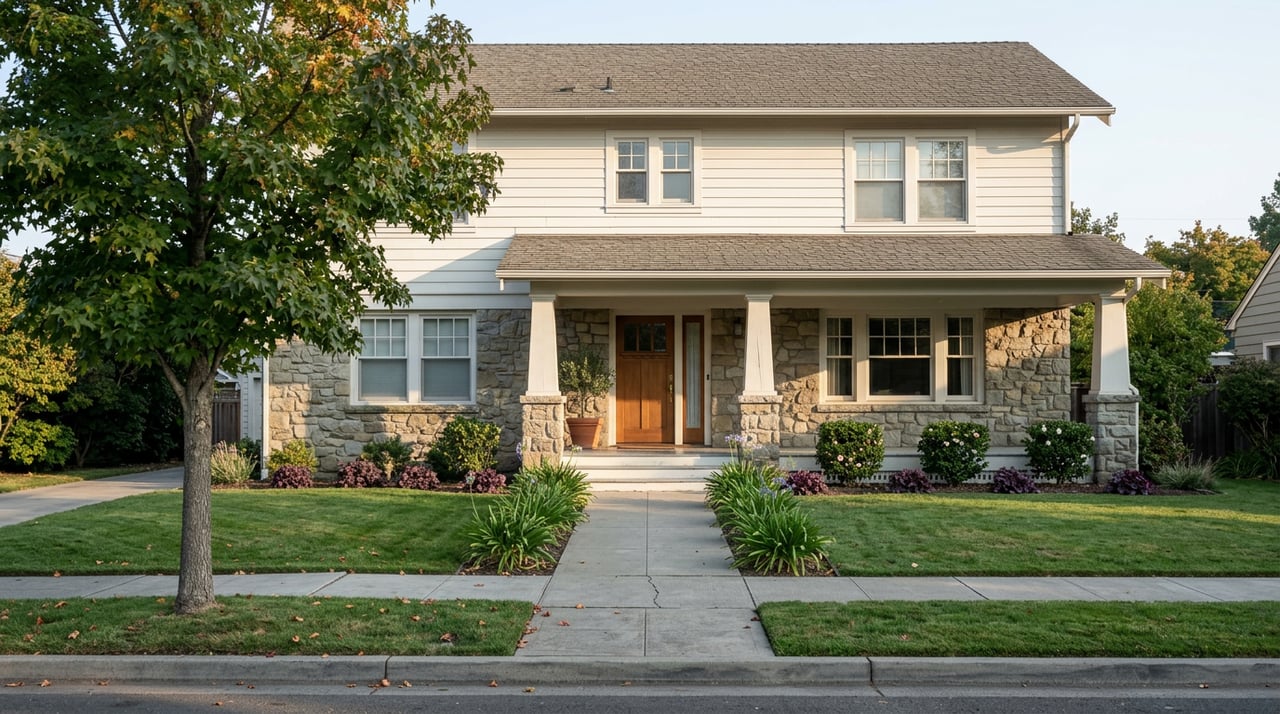
North Verdugo Road Is Getting a $24.7 Million Rebuild. Here's What the Money Is Actually For.
September 3, 2026
September 3, 2026
For years, the city's public works list carried an entry called the North Verdugo Road Multi-Modal Improvements Project, sitting in the same folder as a dozen other corridors waiting on money that hadn't shown up yet. This spring it stopped waiting. The Southern California Association of Governments approved a regional funding round covering federal fiscal years 2026-27 and 2027-28, splitting $1.25 billion in Surface Transportation Block Grant and Congestion Mitigation and Air Quality dollars across 132 projects in the six-county SCAG region. North Verdugo Road walked away with $24.7 million of it.
That number matters less on its own than what it reveals about how the project got funded in the first place, and what the money is actually buying once it lands. The design phase already ran on Measure R, the county's own transportation sales tax, which means the engineering work has been underway on local money for a while. Construction had to go compete regionally against every other city in the SCAG footprint trying to win the same federal pot. Winning that competition tells you the corridor cleared a bar most local repaving jobs never have to clear, and it explains why the scope reads the way it does: not a routine resurfacing, but a safety-focused redesign built to satisfy federal grant criteria for pedestrians, cyclists, and transit riders, not just smoother asphalt for cars.
The funded stretch runs along North Glendale Avenue and North Verdugo Road between the I-134 freeway and Honolulu Avenue, which means it touches three areas most residents think of as separate: Sparr Heights, Verdugo Woodlands, and the Montrose commercial strip at the northern end where Honolulu Avenue picks up. Anyone who drives, walks, or bikes this stretch to reach Glendale Community College, the Civic Auditorium, or Montrose Shopping Park is inside the project boundary whether they realized it or not.
Line up the individual scope items and a pattern shows up that a headline about "road improvements" tends to flatten. New sidewalk construction within the city's right-of-way. Pedestrian-scale lighting on both sides of the street. Curb extensions at Arvin Drive and Mountain Street, the kind of physical bump-outs that shorten crossing distance and force cars to slow into the turn. A feasibility study for Rectangular Rapid Flashing Beacons or Pedestrian Hybrid Beacons, the flashing crosswalk signals cities install where people cross mid-block and drivers don't expect them. Bike lane restriping done specifically to meet the current City of Glendale Bicycle Master Plan standards, not just whatever paint was there before. An intersection reconfiguration at Canada Boulevard aimed at making bicycle movements safer through that junction.
None of that is about moving cars through the corridor faster. Almost every line item is aimed at the opposite problem, making it safer for someone on foot or on a bike to be on this street at all. That's consistent with how STBG and CMAQ dollars get awarded regionally: projects that reduce vehicle emissions and improve multimodal safety score better than straight pavement jobs. The corridor's design already reflects that scoring logic before a single shovel goes in the ground.
The signal work backs this up. Eight intersections along the corridor are getting modifications, not new signals from scratch, which suggests the city is retiming and re-engineering existing infrastructure to handle pedestrian and cyclist movement rather than adding capacity for more car volume.
| Intersection | What's Changing |
|---|---|
| North Verdugo Road at La Crescenta Avenue | Signal modification |
| North Verdugo Road at Menlo Drive | Signal modification |
| North Verdugo Road at Towne Street | Signal modification |
| North Verdugo Road at Canada Boulevard | Signal modification, plus intersection reconfiguration for bicycle travel |
| North Verdugo Road at Civic Auditorium | Signal modification |
| North Verdugo Road at Mountain Street | Signal modification, plus curb extension |
| North Glendale Avenue at East Glenoaks Boulevard | Signal modification |
| North Glendale Avenue at North Verdugo Road | Signal modification |
Two locations along the corridor got specific line items instead of getting folded into the general scope, and both point to who the project was actually designed around.
The first is the loading and unloading zone in front of Verdugo Woodlands Elementary School. Anyone who has idled behind a line of cars during afternoon pickup on Verdugo Road knows why that zone earned its own entry. The second is the pedestrian bridge adjacent to Glendale Community College's Verdugo campus, which is getting structural maintenance along with new public art and wayfinding signage, a combination that reads less like a repair job and more like an acknowledgment that the bridge is a daily walking route for a real volume of students and commuters, not a leftover piece of infrastructure nobody uses.
The city didn't wait for construction to start engaging the corridor's neighbors. Outreach already happened at four specific, named locations earlier this year: an in-person community meeting at the Sparr Heights Community Center on March 18, an Earth Day Fair at Verdugo Park on April 4, a Glendale Community College pop-up at San Gabriel Plaza on April 22, and a table at the Montrose Harvest Market at Montrose Shopping Park on April 26. If you attended any of those and remember a city table with a corridor map, that was this project gathering the input that's now baked into the design the SCAG award is funding.
If you missed all four, the takeaway isn't that the window closed. It's that the city treated this corridor as something worth showing up in three different neighborhoods for, at a farmers market and a fair and a college pop-up, rather than posting a notice and calling it done.
Construction is tentatively scheduled to start in summer 2027, with the city's own project page carrying the standard caveat that this is subject to change. Between now and then, the engineering design work that Measure R already funded continues, and the newly awarded federal construction money moves through its own procurement and scheduling process on the STBG and CMAQ side. That gap, roughly ten months to a year out from where things stand today, is normal for a project of this size moving from a regional funding award to an actual construction contract.
What it means practically for anyone living along the corridor is that the street you drive, walk, or bike today will look close to the same for another year, but the design decisions that will shape it for the next several decades were already made this spring at a community meeting in Sparr Heights and a pop-up table at the college. That's usually where the real decisions get made, long before the orange cones show up.
If you're weighing what a stretch of Sparr Heights, Verdugo Woodlands, or Montrose actually offers day to day, beyond the number on a listing, the corridor's infrastructure future is part of that picture. G&C Properties has spent decades paying attention to exactly this kind of neighborhood detail in Glendale and the Foothills. Let's make it personal, contact us to talk through what a specific street, block, or character home in this corridor actually means for the life you're building around it.
Stay up to date on the latest real estate trends.
When you’re ready to make a move — we’re here to make it meaningful, seamless, and fully aligned with your goals. From first steps to final signatures, we’re by your side