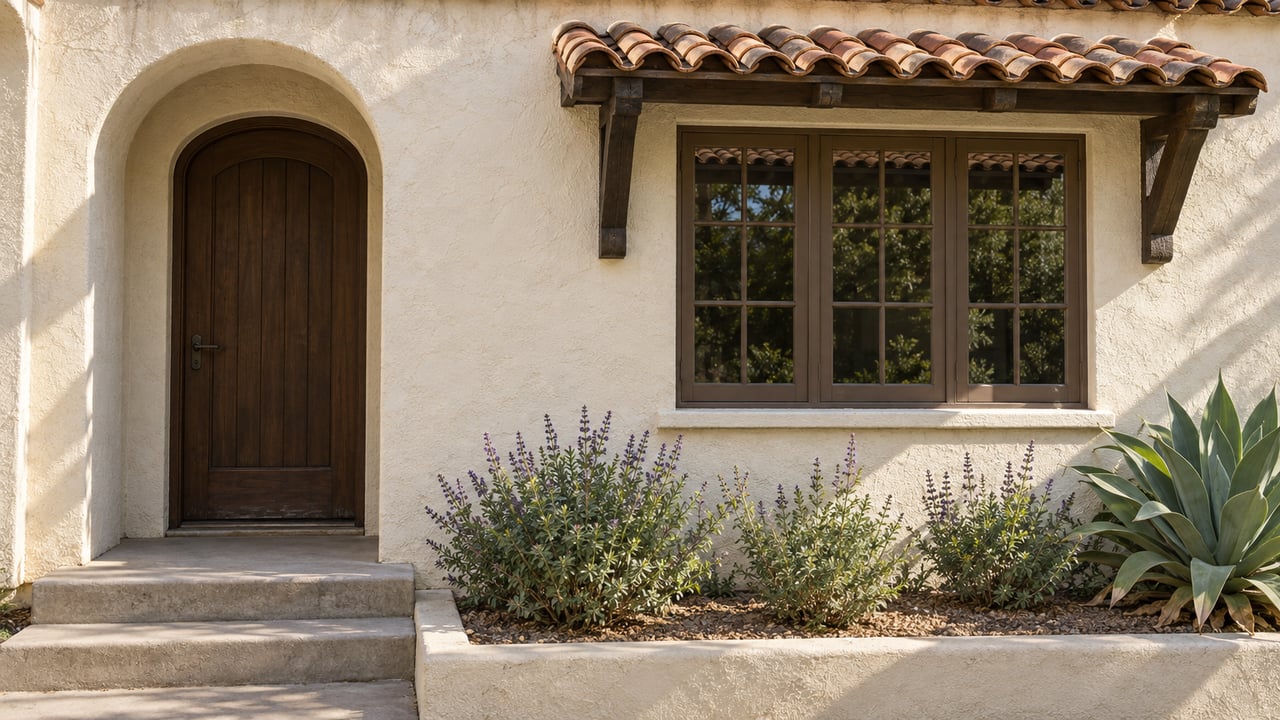
In Glendale's Proposed Water Rates, Your Bill Follows the Reservoir Above Your House
October 29, 2026
October 29, 2026
"My property is assigned Pump Zone 6 at elevation 2,400, but my home is much lower. Can this be corrected?"
A resident wrote that question on a comment card at Glendale Water & Power's October 15 community meeting at Sparr Heights Community Center. GWP's answer, recorded in the city's published Q&A from that meeting, was that the assignment stands. "The pump zone is based on the elevation of the reservoir that serves the home, not the home itself. Water is pumped up to the reservoir and then gravity-fed to homes."
That answer matters for anyone who owns a Glendale home or plans to buy one. Glendale's proposed water rates go to a City Council hearing on Tuesday, November 3. If the Council adopts them, part of every water bill will depend on a feature of the address that doesn't appear on the bill, in a listing or on a map that looks up addresses.
Under the proposal, GWP would divide its service area into seven pump zones, from 724 feet up to 2,483 feet, and add a per-unit charge for each one. Water is billed in HCF, or hundred cubic feet, which is about 748 gallons.
The trouble is finding out which zone you're in. The city's water bill estimator says the pump zone isn't printed on the bill. It points users to a zone map and says it does not look up addresses. GWP's answer to the comment card explains why the map can only go so far. A home's assignment depends on the tank that feeds it, and a house partway down a slope can sit in a high zone because its water first gets pumped above it. GWP's own example is a home at elevation 100 served by a tank at 110, where the charge reflects pumping to 110.
The state's drinking water facility register gives a sense of how layered this is in the foothills. It lists GWP storage with names like Chevy Chase 1290 Reservoir, Chevy Chase 1810 Tank, Glenoaks 1666 Tank, Rossmoyne 1290 Reservoir, Rossmoyne 1666 Tank, Verdugo 1666 Reservoir, Markridge 2000 Reservoir and Emerald Isle 1850 Tank. Several canyons have more than one level of storage. GWP's 2025 Water Master Plan also names the boundary between the 724-foot and 968-foot pressure zones, along with Sparr Heights, as places with low-pressure issues.
The only sure way to learn a home's zone is to ask. The Q&A says GWP Customer Service, at (855) 550-4497, can confirm both pump zone and meter size.
Under the proposal, single-family homes would pay $4.09 per HCF for their first 10 HCF a month in 2027. The pump zone charge is added on top of that. The table below combines the proposed 2027 pump zone rates from the city's Proposition 218 notice with the bill estimates in the city's water rate study by Raftelis, dated September 25, 2026.
| Pump zone | Elevation | 2027 pump charge per HCF | Tier 1 water plus pump charge per HCF | Estimated monthly increase, single-family home using 12 HCF |
|---|---|---|---|---|
| 1 | 724 ft | $0.05 | $4.14 | $26.08 |
| 2 | 968 ft | $0.25 | $4.34 | $28.48 |
| 3 | 1,290 ft | $0.84 | $4.93 | $35.56 |
| 4 | 1,666 ft | $1.83 | $5.92 | $47.44 |
| 5 | 2,000 ft | $2.31 | $6.40 | $53.20 |
| 6 | 2,400 ft | $3.42 | $7.51 | $66.52 |
| 7 | 2,483 ft | $5.08 | $9.17 | $86.44 |
In Zone 7, the pump charge alone would be higher than the base Tier 1 rate. Each of a household's first 10 HCF would cost more than twice what it costs in Zone 1.
The gap between the top and bottom zones in the study's estimates comes to $60.36 a month. That equals 12 HCF times the $5.03 difference between the two pump charges. For a household using 12 HCF a month, that works out to about $724 a year in 2027. The proposal also raises the zone charges every January through 2031, when Zone 7 reaches $7.30 per HCF and Zone 1 reaches $0.07. At the same 12 HCF a month, the yearly gap would be roughly $1,040 by 2031.
The city's headline figure applies to most Glendale customers, who are in Zone 1 with a 3/4-inch meter. For that household, the city puts the overall increase at about 50%, or roughly $26 a month for a single-family home using 1,200 cubic feet. At the October 17 meeting at Brand Park Library & Arts Center, attendees asked about bills going up 100% or more. The roughly 50% figure describes a Zone 1 home with a typical meter, and a home in a higher zone or with a smaller meter can see a larger percentage increase.
GWP describes the zone charge as "a new method, not a new cost." The same pump stations and the same energy have always been used, GWP said, but customers in the lowest zone had been subsidizing the higher ones. According to the October 15 Q&A, Glendale has about 28 potable water pump stations, each with at least three pumps, and about 30% of those stations are down to one working pump.
That reasoning ties the zone charge to energy and equipment, and those costs move with factors outside the rate table. Glendale's rates already include a Water Adjustment Charge under Municipal Code Section 13.08.150. It passes changes in purchased water costs and pumping electricity costs through to customers when they differ from GWP's budget. Imported water from the Metropolitan Water District makes up 60 to 70 percent of Glendale's supply, and MWD's rates have gone up about 34 percent since July 2022.
The broader rate increase pays for aging pipes. The Water Master Plan identifies about $800 million in infrastructure needs over 20 years, and the proposed rates would fund about $100 million in priority work over the next five years. At the Sparr Heights meeting, an attendee asked whether higher zones would be subsidizing Zone 1 if work in the upper zones is a decade away. GWP answered that the plan looked at the whole system and that capital work is ranked by condition, risk and systemwide reliability, not geography alone.
The proposal makes elevation a bigger factor in the bill while making meter size a smaller one. Glendale charges a fixed monthly fee based on meter size, and the proposal sets one price for the three smallest sizes.
GWP says meter size follows a property's fixture count, meaning its bathrooms, faucets and toilets. Most residents have a 3/4-inch meter, and 63% of customers have a 5/8- or 3/4-inch meter. Today, a smaller home with fewer fixtures pays a smaller fixed charge. Under the proposal, a 5/8-inch meter and a 1-inch meter would pay the same. The city's estimator shows a sample 5/8-inch single-family account in Zone 1, using 14 HCF a month, going from $72.73 to $111.28. The current figure includes the drought surcharge.
The tier structure changes too. The current three single-family tiers, starting at $2.80 per HCF for the first 8 HCF, would become two. Tier 1 would cover the first 10 HCF at $4.09, and anything above that would be billed at $6.92 in 2027.
Taken together, small-meter homes would see the same fixed charge across all three sizes, and the remaining difference between two similar houses would come down mostly to how much water they use and how high their reservoir sits.
For a buyer comparing a canyon street with a house in the flats, the proposed zone charge is an ongoing cost that won't show up in a listing. Ask GWP for two details on any address you're considering:
With those two details and the seller's recent usage, you can run the estimator at the proposed rates. Both the pump charge and the water rate apply per HCF used, so using less water lowers both, while meter size affects only the fixed charge.
The Council's public hearing is at 6 p.m. on Tuesday, November 3, 2026, in Council Chambers on the second floor of City Hall, 613 E. Broadway. If adopted, the rates take effect January 1, 2027, with increases each January through 2031. The Council can lower the proposed rates after hearing testimony, but it cannot raise them above what the notice lists.
According to the notice, the rates go through a majority protest process under Proposition 218:
This post is general information, not legal or financial advice. For questions about your own property or a protest, contact GWP or the City Clerk, or talk with the right professional.
Is the zone charge on top of the regular water rate? Yes. It's added per HCF on top of the tiered water rate, so it rises and falls with use.
Do most Glendale customers pay a high zone charge? No. GWP says most customers are in Zone 1, which it calls the largest zone.
What happens after 2031? GWP says it generally reviews water rates every five years through a cost-of-service analysis.
Many of the canyon and hillside character homes we represent sit right where these zone lines would make a difference. If you're selling a home in a higher zone, or comparing a canyon house with one in the flats, G&C Properties can help you factor the proposed water costs into the decision. Let's make it personal. Contact us to discuss your character home.
Stay up to date on the latest real estate trends.
When you’re ready to make a move — we’re here to make it meaningful, seamless, and fully aligned with your goals. From first steps to final signatures, we’re by your side