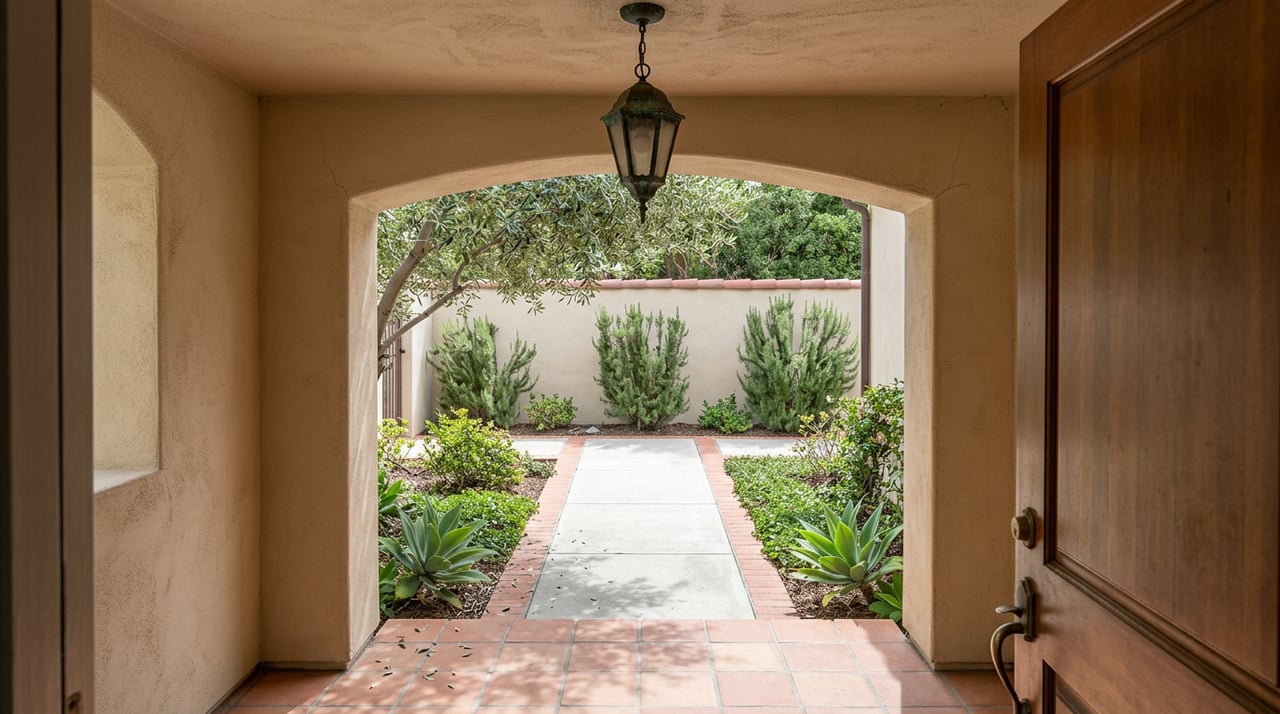
Adams Hill Built Its Own Town Square. It's Two Blocks Long.
September 17, 2026
September 17, 2026
Order a latte at Kafn Coffee on a Saturday morning and you are standing directly across the street from a 1936 gas station. Not a working one. The Streamline Moderne building on Palmer Avenue stopped selling gas decades ago and now runs as a rotating public art gallery inside the old pump house, the centerpiece of what the city calls the Adams Square Mini Park. You can drink your coffee, look at whatever exhibit happens to be on display that six-week rotation in the acrylic-windowed cube, and be back at your car without ever crossing a street with a signal.
That compression is the story. Adams Hill does not have a main street in the way Montrose has Honolulu Avenue or downtown Glendale has Brand Boulevard. It has a loop, and the loop is short enough that most of what a resident needs on a given weekend, a coffee, a loaf of bread, a park with a skate bowl, a crosswalk you actually want to look at, sits inside a walk you could do in the time it takes to finish that latte.
Part of why Adams Hill feels like its own place, distinct from the rest of Glendale in a way that's hard to pin down until you check the history, is that it used to literally be somewhere else. From 1911 until 1918, the hill was part of Tropico, a small independent city that existed for seven years before Glendale annexed it. The neighborhood's business district, Adams Square, sits at the base of that hill, and it has spent more than a century since operating with its own rhythm rather than borrowing Glendale's.
By the 1990s that rhythm had gone quiet. The square was widely considered blighted, and in 1998 then-Mayor Eileen Givens sponsored what the city called a Visioning Tour, asking residents directly how they wanted the block rebuilt. A Community Development Block Grant and the city's Redevelopment Department funded the work that followed. A grassroots group called Friends of Historic Adams Square pushed separately to save the old Richfield Oil gas station rather than demolish it, and in 2000 then-state senator Adam Schiff secured $250,000 in state funds to help restore it. The building was added to the Glendale Register of Historic Resources and Historic Districts in 2016 and reopened as the public art space it is today. One local paper later described the transformation as running from overlooked landmark to town square, which is a fair summary of what a resident actually experiences standing there now.
None of this happened because a developer saw an opportunity. It happened because a small group of residents spent the better part of two decades deciding what their two blocks should look like, then found the funding to build it that way.
Start at Kafn Coffee, a small shop at 1019 E Palmer Avenue that opened in 2017 and has become the kind of place where the person behind the counter learns your dog's name before your last name. It sits directly across the street from the mini park, close enough that regulars carry their cups over to the picnic tables when the gallery has a new show up.
A short walk away sits Art's Bakery & Cafe at 1122 E Chevy Chase Drive, family-run since 1998, the same year the city began its push to rebuild the square around it. The bakery has expanded over the years into a full grill menu, Neapolitan pizza, and even Georgian khinkali dumplings alongside the cakes and pastries that built its name, but the through-line is that it has been serving this same two-block radius since before the revitalization even started.
From there it's another short walk to Palmer Park, a neighborhood park that packs a surprising amount into a small footprint:
None of these three stops is more than a few minutes from the other two. That is not an accident of geography. It's what a neighborhood association spends decades building when it decides its commercial core should be walkable rather than drivable.
The Adams Hill Neighborhood Association, an all-volunteer group whose boundaries run along Glendale Avenue to the west and Chevy Chase and Acacia to the north, has kept pushing on the square long after the original 1998 revitalization wrapped. At a community celebration held at the mini park, the association recognized city Public Works staff for traffic calming and street beautification work, the Glendale Library's Arts and Culture supervisor for partnering on Adams Square programming, and resident Ute Baum specifically for volunteering to design the mini park's garden.
The same event honored artist Keith Knueven for a crosswalk mural at the corner of Adams Street and Palmer Avenue, painted through the city's Creative Crosswalk-Mural Art Program. Knueven titled the piece "Where We Meet," which is either a coincidence or the most literal possible description of what that intersection has become for the neighborhood around it.
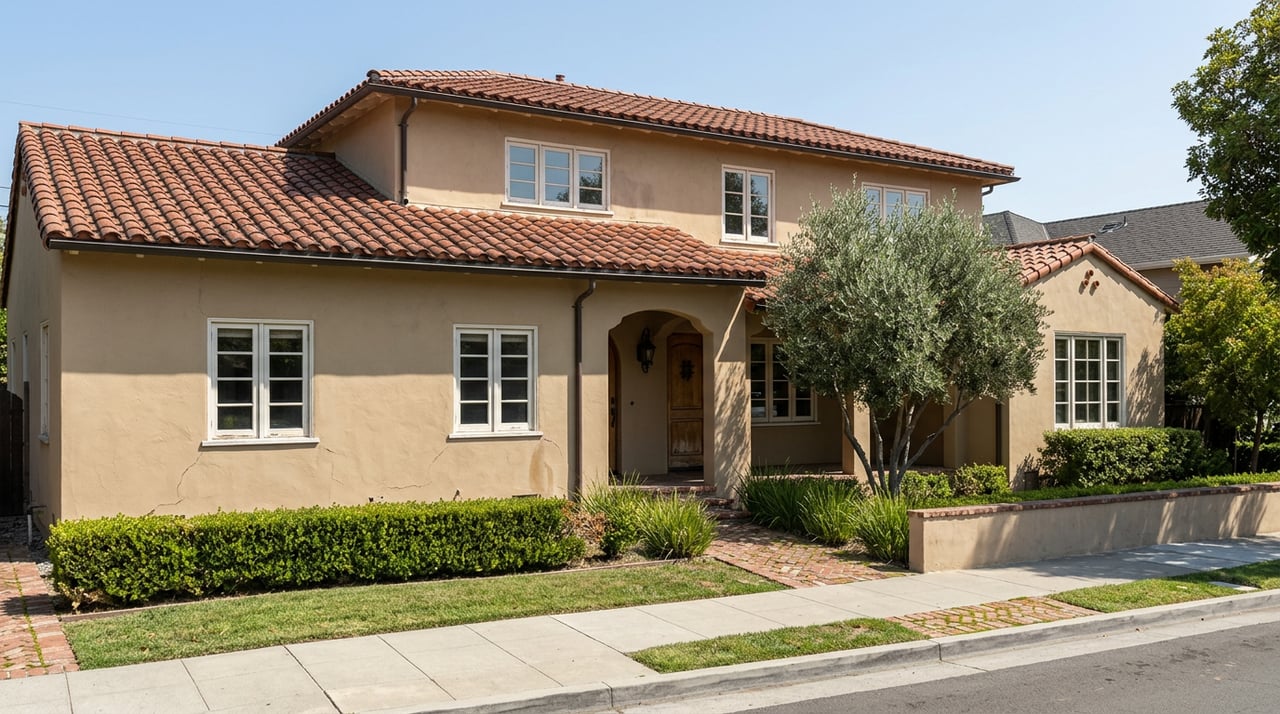
The Glendale Historical Society, which has run public talks on the neighborhood's own past, describes Adams Hill as Glendale's most bohemian and architecturally distinctive neighborhood, an eclectic stack of homes piled up the hillside above a business district built small on purpose. That's not marketing language. It's how the people who study Glendale's neighborhood history for a living choose to describe this one specifically, as distinct from the rest of the city rather than a smaller version of it.
Compare that to the commercial stretches in Glendale's other foothill neighborhoods, where a Saturday errand run usually means a drive down a boulevard with parking to hunt for. Adams Hill's version of that same Saturday fits inside a walk. You are not choosing between the bakery and the park because they're on opposite ends of town. You're choosing the order you hit them in.
That's the part of Adams Hill that doesn't show up in a listing description or a walkability score. The neighborhood's business district was engineered, block by block, by residents who kept showing up to meetings for twenty-plus years, to be small enough that nobody needs a car to use all of it. Whether you've lived on the hill for three years or thirty, that's worth knowing the next time someone asks what makes this corner of Glendale different from the rest of it.
If you're curious what a home in a neighborhood like this is actually worth, or what it takes to buy or sell one without losing the character that makes it worth living in, G&C Properties has spent decades working exactly this kind of Glendale block. Let's make it personal, contact us to talk about your character home.
Stay up to date on the latest real estate trends.
When you’re ready to make a move — we’re here to make it meaningful, seamless, and fully aligned with your goals. From first steps to final signatures, we’re by your side